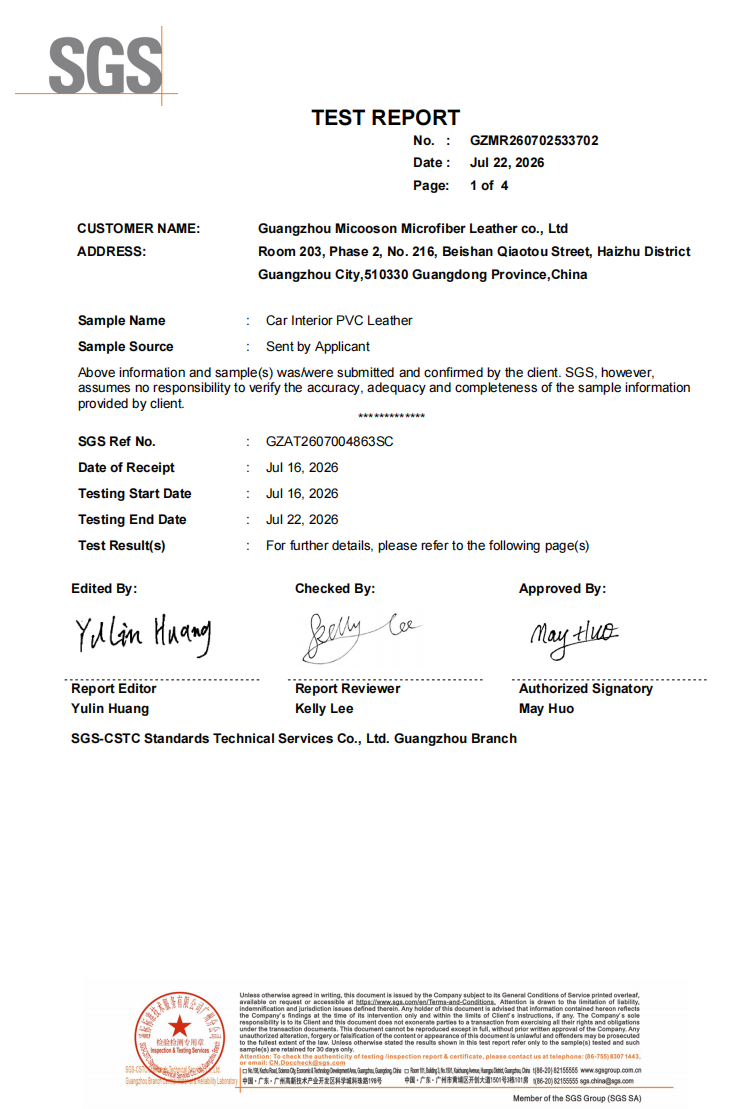
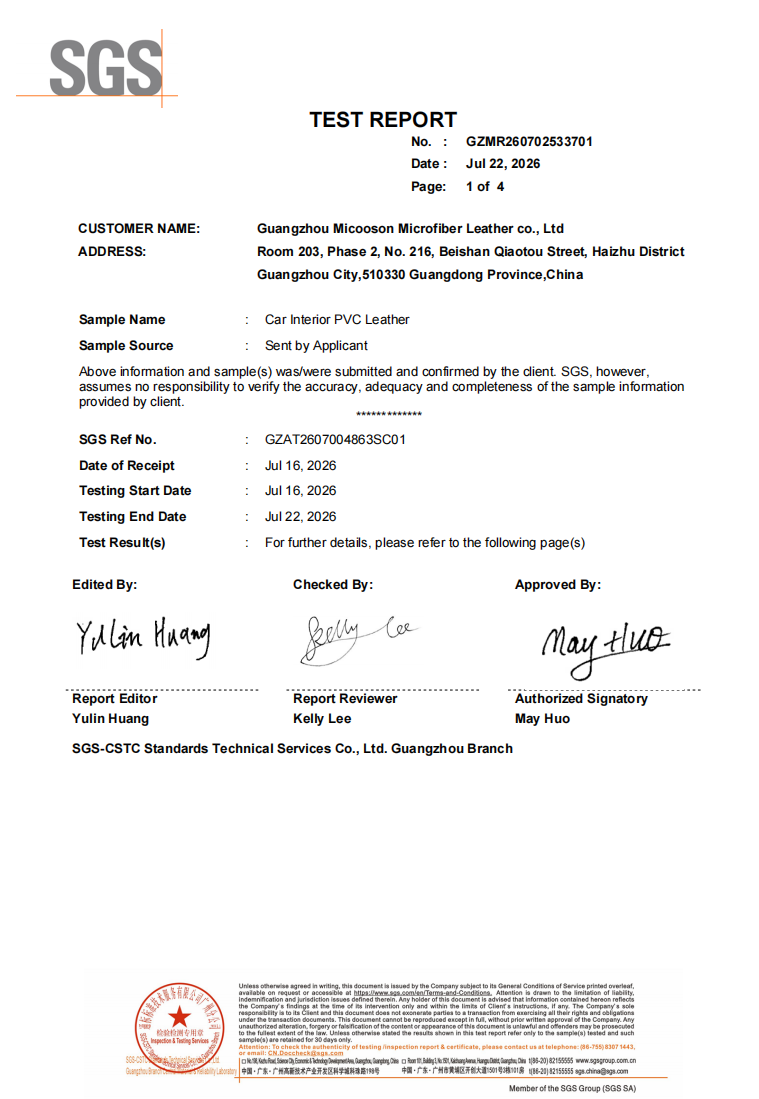
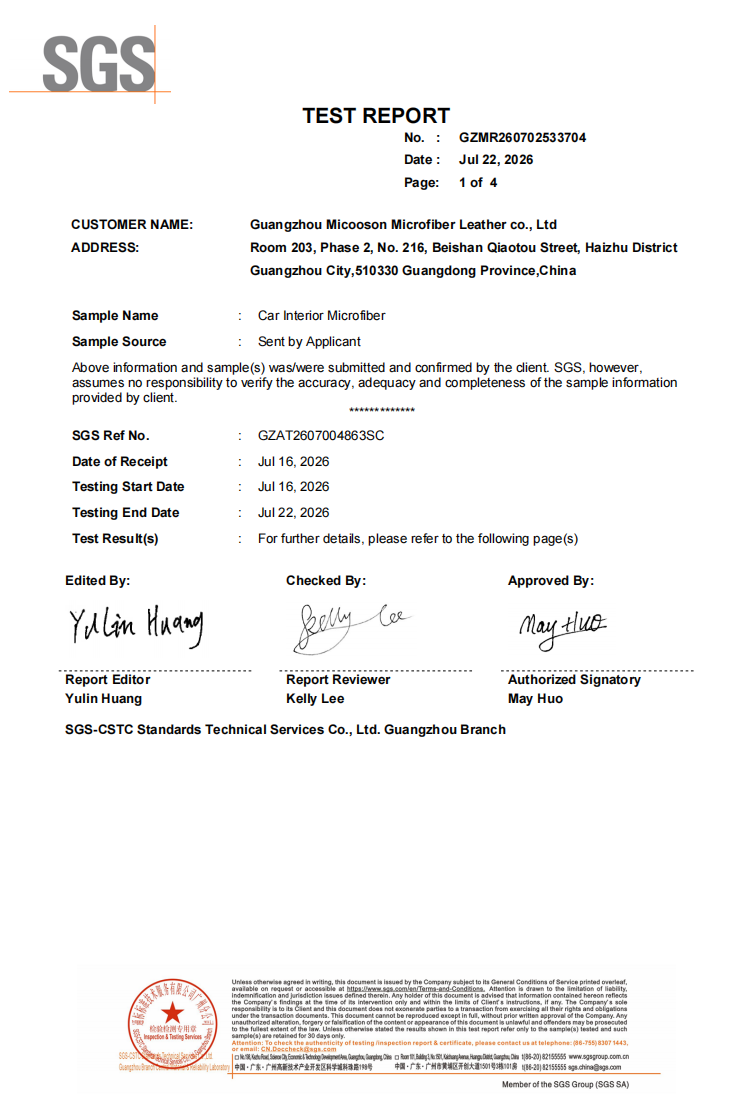
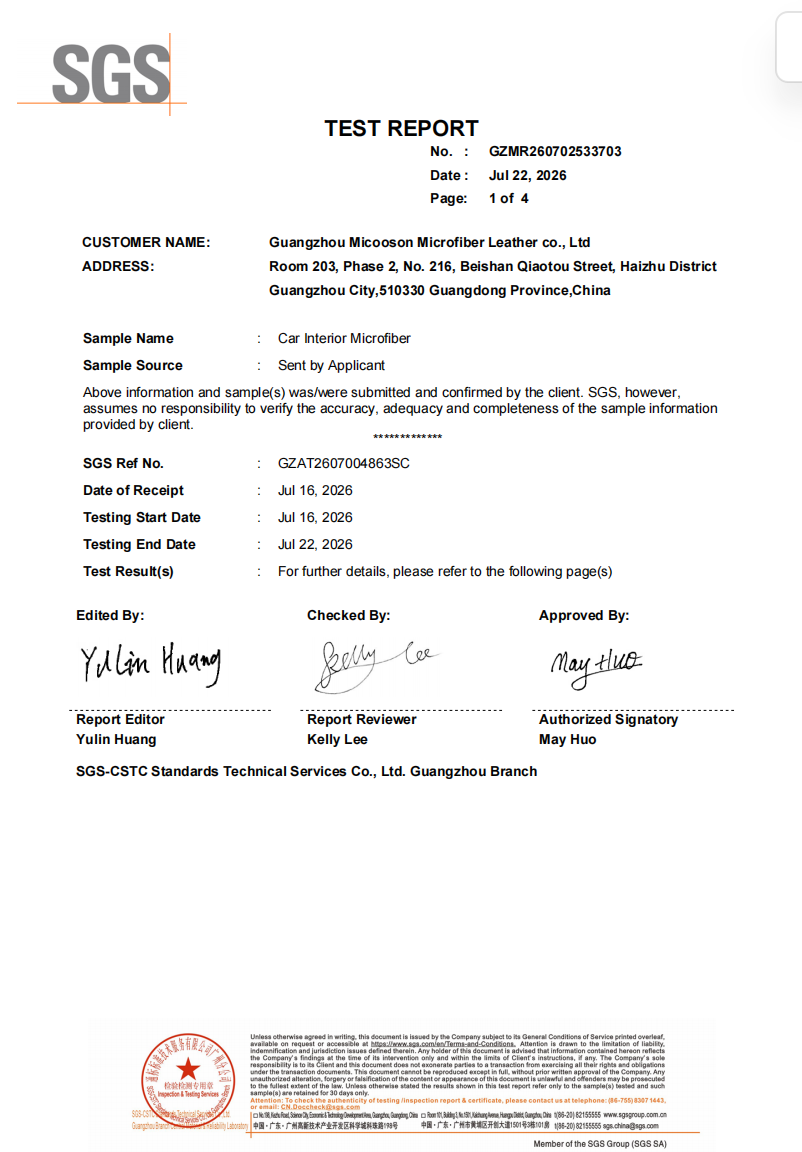
Automotive seat covers and interior trim are exposed to sunlight, cabin heat, repeated contact and perspiration. These conditions can affect how upholstery looks over time and whether colour transfers to adjacent materials. MICOOSON develops PU microfiber leather and PVC synthetic leather for automotive seating and can coordinate third-party testing based on the material construction and vehicle programme requirements.
ISO 105-B06 evaluates colour fastness and ageing under simultaneous exposure to xenon arc light and heat. The method gives particular consideration to conditions inside motor vehicles. It helps seat and trim manufacturers compare colours and finishes for applications exposed to sunlight and elevated cabin temperatures. When comparing reports, check that the exposure conditions and assessment criteria match.
ISO 105-X12 assesses how readily colour transfers from a textile specimen to a rubbing cloth under dry or wet conditions. When specified for a suitable automotive upholstery material, it can help evaluate colour transfer in areas with frequent contact, such as seat cushions and side bolsters. The report should identify the tested surface and give separate results for dry and wet rubbing when both are specified.
ISO 105-E04 assesses the response of textile materials to simulated perspiration. The evaluation can include colour change in the specimen and staining of adjacent fabric. For coated automotive upholstery, the project specification and laboratory should confirm the applicable method and test surface.
MICOOSON offers custom colours, grains, thicknesses and surface finishes for PU microfiber leather and PVC synthetic leather used in seat covers, headrests and interior trim. We can coordinate sample preparation and third-party testing against your project requirements.
Share your material specification, colour reference, intended application and OEM test requirements with MICOOSON so we can confirm the test method, exposure conditions and acceptance criteria before sampling.